After floodwater has been removed and affected areas have been cleaned and dried, the property may still require repairs. Flood damage often affects drywall, flooring, cabinets, trim, doors, insulation, other interior finishes, and structural components where water has penetrated.
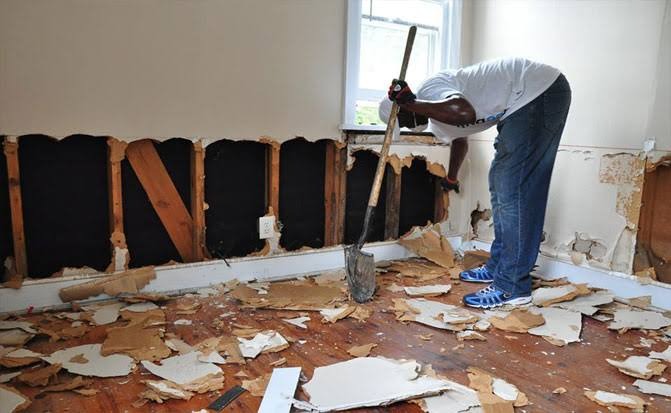
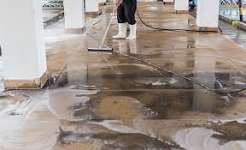
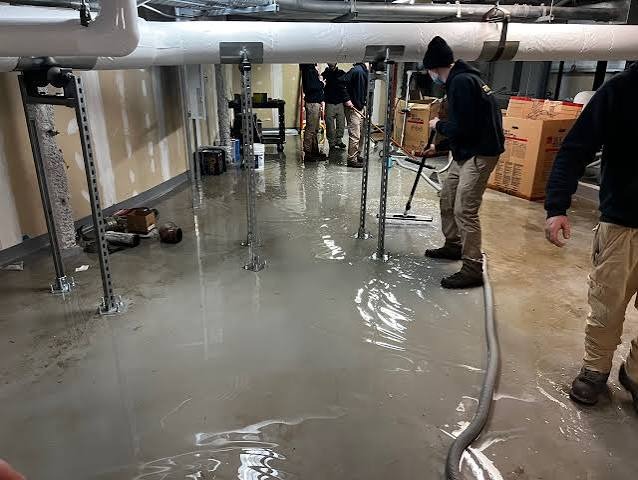
It is important to understand the operational difference between flood cleanup and flood damage repair. Flood cleanup addresses the immediate aftermath of a flood event—pumping standing water, clearing mud and debris, and setting up structural drying equipment.
Flood damage repair, on the other hand, addresses the physical property damage that remains after the affected areas have been evaluated and properly dried. Water absorption often causes swelling, warping, delamination, and structural deterioration in porous materials that drying alone cannot reverse.
Specific repair requirements depend on several key factors: the water source, duration of exposure, material type, extent of physical damage, level of contamination, moisture levels in surrounding structures, and the overall condition of the building.
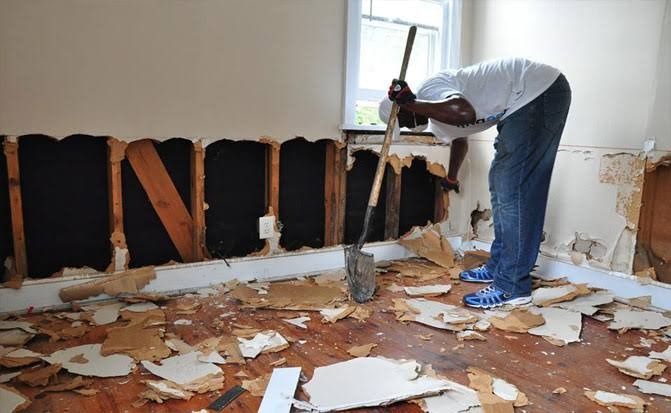
Calibrated moisture meters verify framing dryness before reconstruction begins.
Flooding can compromise building components in distinct ways. Materials should be carefully evaluated before deciding whether they can be restored or need replacement.
Drywall absorbs water quickly, losing structural strength and crumbling. Saturated drywall requires cutting and replacement above the water line.
Hardwood cupping, laminate buckling, loose tile, and compromised subfloor sheathing indicate physical damage requiring repair.
Manufactured wood bases and toe kicks swell and delaminate when standing water pools around kitchen and bathroom vanities.
Baseboards and lower door casings absorb ground moisture directly, often swelling, warping, or pulling away from wall framing.
Interior hollow-core and exterior doors can swell, stick in frames, or delaminate after direct floodwater contact.
Wet fiberglass and cellulose insulation lose thermal performance and trap moisture against wall studs and subfloors.
Staining, sagging plaster, peeling paint, and water marks show structural assemblies that need physical repair.
Fasteners, electrical boxes near water level, shelving, and crawl space components may require replacement.
Addressing physical property damage requires understanding how different building materials respond to floodwater.
Floodwater causes drywall swelling, softening, staining, and internal deterioration. Repair involves clean straight flood cuts above moisture levels, stud inspection, and hanging new moisture-resistant drywall.
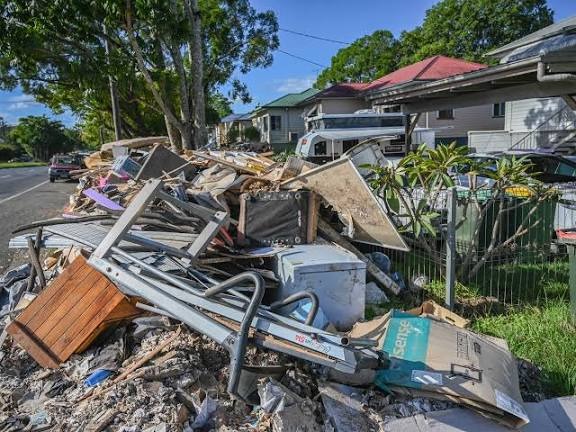
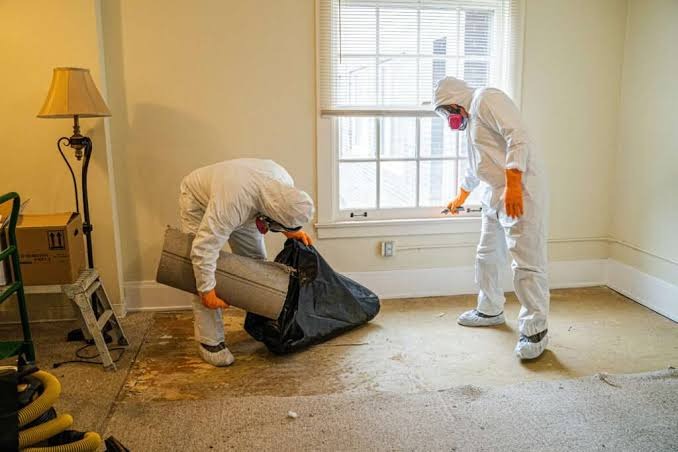
Flooring materials react differently: hardwood may cup or warp, laminate and vinyl planks can delaminate, and subfloors may swell. We evaluate subfloor integrity before repairing or installing new finished flooring.
Lower kitchen and bathroom cabinetry exposed to standing water often experiences swelling and warping. Repair includes assessing box frames, replacing ruined toe kicks, or reinstalling salvageable units once dry.
Baseboards and decorative moulding directly absorb floodwater from floors. Saturated trim is removed to allow wall cavity airflow, followed by installation of matching replacement trim.
Floodwater entering doorways causes frame swelling, sticking jambs, and door core delamination. Repair involves realigning jambs, replacing damaged thresholds, and installing new pre-hung or slab doors.

Saturated batt and blown-in insulation holds contaminated water inside wall framing and crawl spaces. Removing ruined insulation and re-installing fresh insulation is essential for energy efficiency and structural care.
Paint, wall textures, built-in shelving, closets, bathroom vanities, and low-mounted electrical receptacles that sustained water contact require proper repair and refinishing.
Thoroughly inspect all affected rooms to identify which building components suffered physical damage, structural degradation, or material breakdown.
Repairing materials while moisture remains can trap dampness and cause repeat damage. Moisture readings confirm assemblies are ready.
Distinguish between materials that can be salvaged, cleaned, and repaired versus unsalvageable components that require full replacement.
Safely remove damaged drywall, swollen flooring, saturated insulation, and ruined trim to expose clean, sound structural framing.
Install new drywall, subflooring, finished floors, trim, cabinets, doors, and insulation, matching original building specifications.
Apply paint, textures, finishes, and final trims to complete the restoration and return the property to pre-flood condition.
While often used interchangeably, flood damage repair and flood restoration describe different phases within property recovery:
Focuses specifically on the physical reconstruction phase: fixing, hanging, laying, and replacing damaged building materials such as drywall, flooring, trim, and cabinetry.
Encompasses the complete end-to-end recovery lifecycle: emergency response, standing water removal, deep extraction, debris cleanup, structural drying, damaged material removal, and final repairs.
Physical repairs should never begin immediately after standing water disappears. Removing surface water does not mean building assemblies are dry.
Hidden moisture frequently lingers inside concrete subfloors, behind wall cavities, within insulation batts, and beneath cabinet bases. Beginning drywall patching or installing new flooring over trapped moisture will lead to warping, buckling, and structural failures.
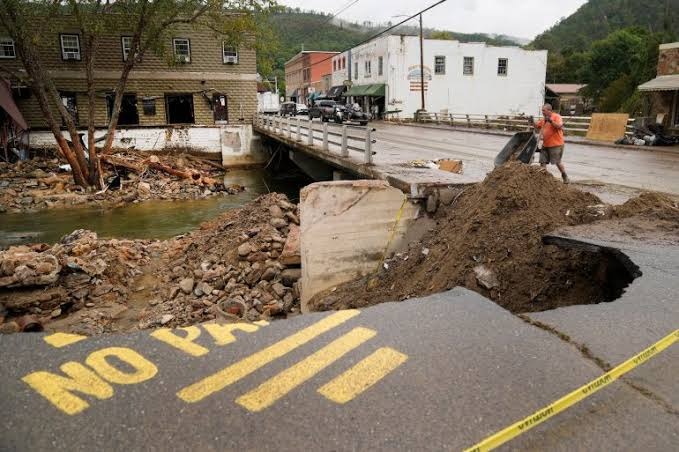
Panama City's coastal geography along St. Andrews Bay and the Gulf of Mexico exposes local properties to severe tropical weather, storm surge, coastal flooding, and torrential rainfall.
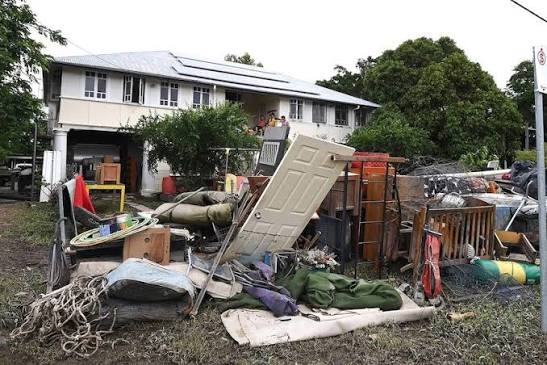
Following major storms, properties often sustain damage across multiple rooms and assemblies simultaneously. Storm flood damage repairs commonly involve:
Single-family homes, townhouses, and duplexes require coordinated repair across varied living areas:
Multi-family residential units require distinct repair coordination between private interior elements and shared structural components:
Commercial repairs require balancing durable reconstruction with business continuity priorities.
Repairing commercial carpet tiles, partition walls, executive suites, and customer conference rooms.
Restoring sales floors, retail display casework, fitting rooms, and inventory storage areas.
Repairing commercial kitchen tile, dining room booth seating, service counters, and restrooms.
Addressing concrete floor joint sealants, lower structural metal stud framing, and loading dock offices.
Timely repair of rental units and vacation properties to minimize prolonged tenant displacement.
Reconstructing server rooms, electrical distribution closets, and mechanical utility spaces.
Visible signs often indicate deeper damage beneath surfaces that requires targeted repair.
Planks that cup, crown, buckle, or separate along seams after water exposure.
Bulging wallboard, soft gypsum cores, or crumbling lower sheet edges.
Blistering, cracking, or flaking paint caused by moisture trapped behind coatings.
Plywood or particleboard cabinet bottoms and toe kicks that have expanded.
Trim pulling away from studs, swelling, or displaying surface rot.
Persistent damp smells indicating unaddressed moisture in framing or insulation.
Discoloration rings along ceilings, baseboards, or drywall surfaces.
Spongy subflooring, brittle trim, or compromised structural timbers.
Clear high-water marks indicating the depth and reach of standing floodwater.
Whether materials can be saved depends on water contamination, exposure duration, and material composition. Below is an objective summary:
| Material | Possible Outcome |
|---|---|
| Drywall | Dry, repair, or replace depending on condition and water level |
| Hardwood | Dry/restoration or replacement depending on exposure duration and warping |
| Tile | Often evaluated with surrounding materials/subfloor stability |
| Carpet | Cleaning/restoration or replacement (padding almost always replaced) |
| Cabinets | Drying, structural repair, or replacement based on wood type |
| Insulation | May require removal depending on material and contamination level |
| Baseboards | Clean/repair or replace depending on swelling and material |
| Doors | Dry/repair or replace depending on core type and structural warping |
Standard homeowners insurance policies generally exclude damage caused by external flooding. Flood insurance is a separate form of coverage provided through the National Flood Insurance Program (NFIP) or private flood insurance underwriters.
Because individual policies, building deductibles, and covered line items vary, coverage cannot be guaranteed. Property owners should review policy guidelines and coordinate directly with their insurance carrier.
We provide flood damage repair and reconstruction services throughout Panama City and surrounding Bay County communities.
The repair timeline varies based on the individual property loss rather than a fixed standard duration. Factors that influence the repair schedule include:
Not necessarily, but visible dryness on surface materials does not establish that every affected component is free of moisture or structural damage.
Moisture frequently penetrates deep beneath hardwood and vinyl plank systems, into subfloor plywood, inside wall cavity insulation, and behind lower cabinets. A comprehensive moisture and structural assessment must always precede deciding what repairs are necessary.
Got questions about our flood services? Here are answers to common questions about our process, response times, and restoration work.
(786) 776-2868 →Flooding can leave damage behind even after standing water has been removed. If your Panama City home or business needs repairs following a flood, contact us to discuss the affected areas and determine the appropriate next step.